
Lock the shared run pace first. Test station work under fatigue. Give every station a lead athlete, a switch trigger, a finisher and a fallback. Then rehearse the words you will use when neither of you wants a conversation.
The plan breaks before the SkiErg
You agree to split everything evenly. It sounds organised. The first run feels easy, the SkiErg arrives, and one partner takes the opening turn a little too deep. The switch is late. The second athlete starts cold, chases the monitor, and finishes the station breathing harder than planned.
The team leaves together, but the next run is already carrying two different debts. One athlete needs recovery. The other has unused capacity. Your 50/50 plan was equal. It was not efficient.
This is the real doubles problem: the clock records one team, but the work lands on two bodies. Every decision changes both the current station and the next shared run.
The rules create a two-body race
The current official HYROX overview describes Doubles simply: partners run together and split each workout station as they choose. The latest discoverable English Doubles rulebook at the time of publication is the season 2025/26 edition. It describes a You Go, I Go format in which one partner works while the other rests, with the team deciding the distance or repetitions each completes.
This article does not treat a past-season penalty, load or movement detail as a current rule. Verify the current rulebook and your event's technical briefing before racing. Race-crew direction overrides this planning guide.
Those boundaries produce four costs that generic station-split tables often miss:
- Shared-pace cost: the pair can only use a pace both athletes can reproduce.
- Work-imbalance cost: equal work can be expensive when capacities differ.
- Switch cost: every vague, late or messy changeover spends time and attention.
- Re-entry cost: the athlete who finishes a station carries that effort into the next shared run.
Build the LINK-8 plan
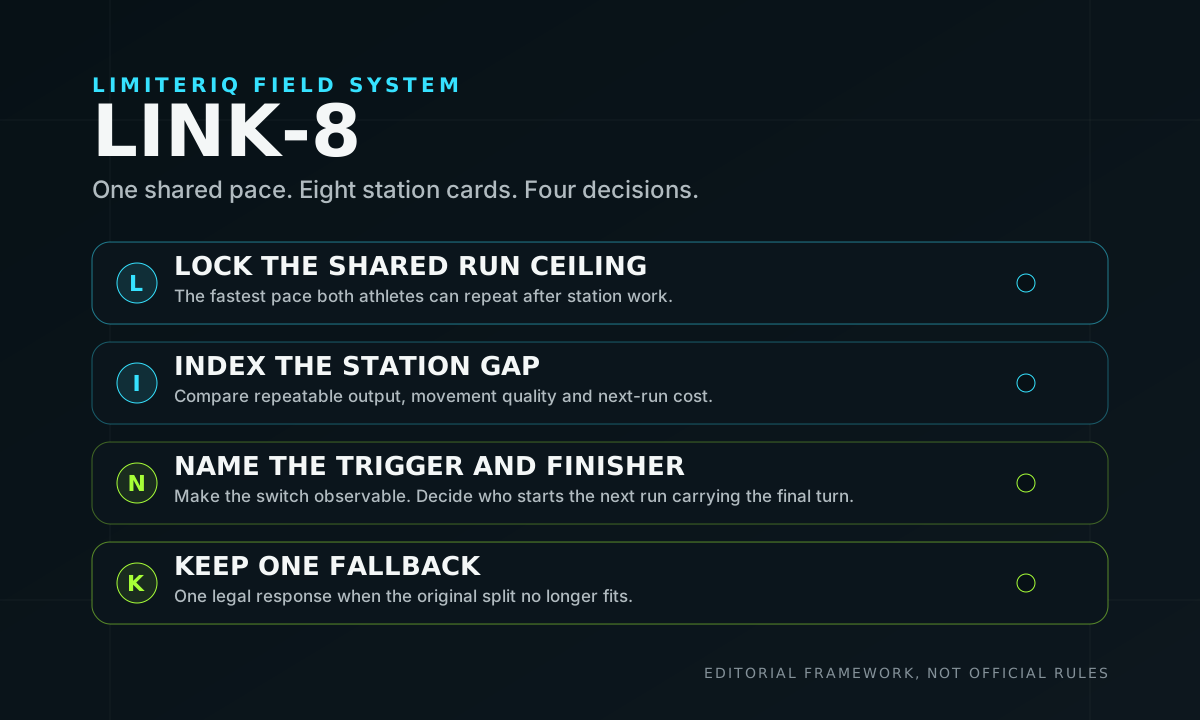
LINK-8 is a LimiterIQ editorial framework. It is not an official HYROX system. The in-app Doubles Planner handles the station split itself; LINK-8 is the conversation around it. The goal is to make eight station decisions before the venue gets loud.
Lock the shared run ceiling
Choose the fastest pace both athletes can repeat after work, not the pace the faster runner can tolerate when fresh.
Index the station gap
Compare repeatable output, movement quality and recovery cost. Use evidence, not identity, to decide who takes more work.
Name the trigger and finisher
Decide what causes the switch and who should complete the final turn before the next run begins.
Keep one fallback
Give every station one legal, simple response for missed reps, fading quality, a delayed switch or a plan that no longer fits.
Write one card for every station
The card is deliberately small. If the plan needs a speech, it is too fragile for race conditions.
| Station | Evidence to collect | Decision to record | Fallback question |
|---|---|---|---|
| SkiErg | Repeatable output and breathing cost | Opening athlete, switch cue, finisher | What changes if the first turn runs long? |
| Sled push | Controlled lane quality and next-run effect | Lead athlete and legal change point | Who takes the next safe segment? |
| Sled pull | Rope control, posture and recovery cost | Lead athlete and switch trigger | What cue prevents a rushed handoff? |
| Burpee broad jumps | Movement rhythm and distance consistency | Segment owner and quality trigger | Who takes over if rhythm breaks? |
| Row | Repeatable output and machine changeover | Opening athlete, switch cue, finisher | How will settings and straps be handled? |
| Farmers carry | Grip, turns and post-carry running | Lead athlete and legal handoff point | What happens at the first grip warning? |
| Sandbag lunges | Legal reps, balance and breathing cost | Segment owner and technique trigger | Who protects rep quality under fatigue? |
| Wall balls | Valid-rep rhythm and failure distance | Set trigger, finisher and late-race fallback | What changes after the first no-rep? |
Lock the pace before allocating stations
The faster runner does not set the pace. The slower runner does not automatically set it either. The pair sets the fastest shared pace that survives the work allocation.
Start with an honest pace from recent running evidence. Then test it after a familiar station segment. If one athlete needs the whole next kilometre to recover, the problem might be the run pace, the previous work turn, the switch timing or the combination. Do not diagnose from the slow split alone.
The LimiterIQ race calculator has a Doubles format option. Use it to frame run and station budgets, then replace estimates with the pair's own rehearsed evidence. It does not decide partner work allocation for you.
Choose a switch trigger, not a promise
"I will go until I am tired" is not a trigger. Fatigue is gradual, noisy and easy to negotiate with. A useful trigger is observable and legal under the current rules.
- Distance or repetition trigger: simple and predictable when the movement and venue allow it.
- Quality trigger: switch before legal movement quality or safe control deteriorates.
- Output trigger: switch when a tested pace or rhythm can no longer be held without a costly surge.
- Fallback trigger: switch immediately when a no-rep, missed cue or unexpected condition makes the original plan worse.
Do not invent your own movement standard or ignore a judge to preserve the plan. The plan serves the race. It does not outrank it.
Run the two-body rehearsal
You do not need a full race simulation to learn something useful. Use one familiar, submaximal run-plus-station sequence that both athletes can complete safely. Keep the first test simple.
Set the shared pace
Choose a conservative kilometre pace from current training, then agree what will make you slow it.
Test the even split
Use a legal, familiar station segment. Record work time, changeover pause, movement quality and the first minute of the next run.
Change one decision
Adjust only the work share, switch trigger, finisher or pace. If several change, you will not know what helped.
Keep the smallest win
Choose the version that improves total pair execution without creating a bigger next-run cost.
Stop the session for pain, dizziness, unusual breathing difficulty or another concerning symptom. Use appropriate qualified care. This framework does not clear an athlete to train or race.
Use four words when the room gets loud
Long instructions are fragile under fatigue. Rehearse four neutral commands and give each one a single meaning:
- PACE: return to the agreed shared run effort.
- READY: the resting partner is prepared to take the next legal turn.
- SWITCH: complete the current legal movement, then change.
- OUT: the station is complete and both partners leave together when directed.
The exact words do not matter. Consistency does. Practise them without blame, sarcasm or hidden negotiation.
Use LimiterIQ for the individual constraints
A partner plan cannot erase individual limiters. One athlete may carry the running constraint. The other may lose movement quality under station fatigue. If you only look at the combined result, both problems can hide.
Each athlete can use the LimiterIQ assessment to identify an individual training constraint, then bring that evidence into the LINK-8 conversation. The LimiterIQ app now includes a free Doubles Planner that splits all eight stations between partners into a shareable race-day split card. Training plans remain individual, and LimiterIQ does not create a shared training program or track live partner handoffs.
The Doubles Planner is division-aware: pick your Doubles division, split all eight stations between Partner A and Partner B, then share the split card so both phones carry the same plan. Members also get per-partner pacing targets on top. Training plans stay individual - each partner still trains their own limiter.
One team. Two limiters.
Diagnose separately. Plan together.
Use the free assessment for individual training-constraint prioritisation. Then write the shared pace, lead athlete, switch trigger, finisher and fallback for each station.
Find each partner's limiterHYROX Doubles strategy FAQ
Do both partners run every kilometre in HYROX Doubles?
The current official HYROX overview describes Doubles as running together and splitting each workout station. Check the current rulebook and event briefing before race day because seasonal details can change.
Should HYROX Doubles station work be split 50/50?
Not automatically. Start with an even test, then allocate work from repeatable station output, changeover cost, movement quality and the effect on the next shared run.
How should a HYROX Doubles pair choose run pace?
Use the fastest shared pace both athletes can reproduce after station work. A fresh one-kilometre time is not enough. Rehearse the pace after a familiar station segment and judge the pair, not the faster runner.
How often should partners switch at a station?
There is no universal number. Choose a simple trigger that preserves movement quality and avoids an exhausted changeover. Confirm that the trigger complies with the current rulebook and race-crew direction.
Can LimiterIQ create a HYROX Doubles team plan?
For race-day splits, yes: the LimiterIQ app includes a free Doubles Planner that splits all eight stations between partners and produces a shareable split card. Training plans remain individual, and LimiterIQ does not create a shared training program or track live partner handoffs.
Sources and evidence boundary
- HYROX, The Fitness Race. Current public overview used for the broad Doubles format description. Last verified 3 August 2026.
- HYROX Doubles Rulebook, season 2025/26, R1. Used only for clearly labelled past-season format context. Last verified 3 August 2026.
- LimiterIQ pacing guide, transition guide and race calculator. Used for internal planning connections, not official race rules.
LINK-8, the four-cost model, the station card and four race commands are LimiterIQ editorial analysis. They are not official HYROX rules and have not been validated as a universal fastest strategy.
This is general training information, not medical advice or an individual coaching prescription. LimiterIQ is independent and is not owned by, endorsed by, partnered with, sponsored by, certified by, approved by or officially affiliated with HYROX World GmbH. HYROX is referenced descriptively only.