
Wall balls finish the HYROX Singles race. The current Season 26/27 rulebook specifies 100 valid repetitions for every Singles division, with division-specific ball weights and target heights. That makes valid-rep execution the first constraint. A fast attempt that receives a no-rep does not move the official count.
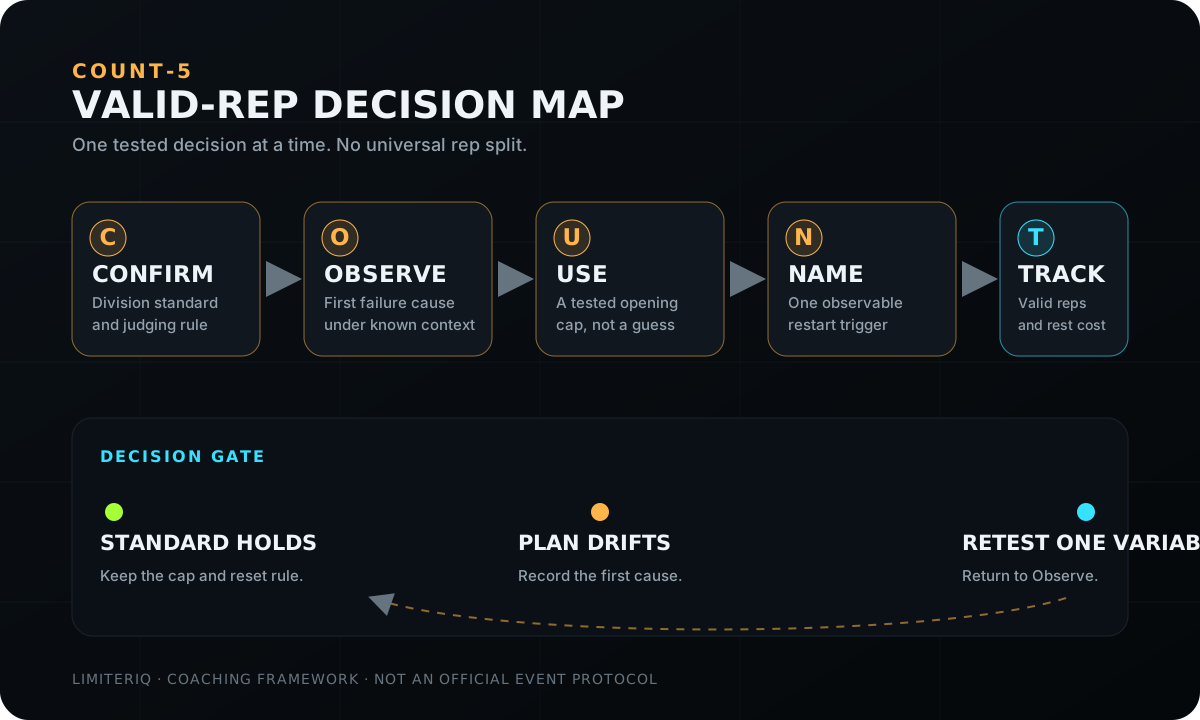
Do not begin with a universal 30, 20 or 10-rep prescription. Confirm your division standard, identify how your reps fail, test a conservative opening cap under relevant fatigue, choose one observable reset trigger and track valid reps plus rest cost.
COUNT-5 is a coaching framework, not an official HYROX protocol or a performance guarantee.
1. Confirm the current standard
The rulebook comes before gym folklore. At the start of the Singles station, the athlete stands tall with hips and knees extended while holding the ball, then squats with the hips lower than the knees and throws the ball with both hands to the correct target. If the ball reaches the ground, the athlete must reset standing tall and may not continue by catching it on the bounce. Continue until the judge confirms 100 valid reps and permits you to leave the station.
The rulebook also says the digital target display is a visual aid, not the official judging standard, and that wall-ball movement-standard infringements do not receive a warning. The practical implication is simple: build a plan around valid movement, not around hoping a marginal rep survives fatigue.
| Division | Repetitions | Ball | Target height |
|---|---|---|---|
| Women | 100 | 4 kg | 2.70 m |
| Women Pro | 100 | 6 kg | 2.70 m |
| Men | 100 | 6 kg | 3.00 m |
| Men Pro | 100 | 9 kg | 3.00 m |
Rules can change. Recheck the official rulebook linked in the sources before your event. Doubles and adaptive categories have separate requirements and are outside this Singles guide.
2. Build your plan with COUNT-5
Confirm the standard
Use your current division weight, target height and valid-rep criteria. If your training target or ball differs, label the session as a variation rather than pretending it is race-identical.
Observe the failure pattern
Separate missed height, missed target, shallow depth, catch-position loss, breathing distress and rest drift. Then ask whether the real cause began earlier in the race. The wall-ball diagnosis guide owns that upstream analysis.
Use a tested opening cap
Compare candidate caps in repeatable training conditions. Keep the option that protects valid-rep quality and allows the next set to begin as planned. A cap is a ceiling, not a target you must force.
Name one reset rule
Choose an observable trigger for restarting, such as one deliberate breath after you have secured the ball and regained position. Test it. If the pause grows without a decision, the rule is not controlling the break.
Track validity and recovery cost
Log attempted reps, valid reps, no-rep cause, total work time, total rest time and post-set RPE. Trend your own sessions. Do not turn one good day into a universal race prediction.
3. Test the decision, not your ego
A wall-ball plan needs enough specificity to guide behaviour and enough flexibility to survive the day. It does not need a heroic opening number. General resistance-training evidence does not establish that reaching momentary failure is required for strength development, and it does not prove any one HYROX set scheme is optimal. Use that evidence boundary honestly.
Fresh standard audit
Use comfortable submaximal sets. Film from the side and front. Review depth, target contact and the ground reset before adding fatigue.
Cap comparison
After the same controlled lead-in on separate days, compare two conservative opening caps. Hold equipment and judging criteria constant.
Compromised rehearsal
Place your selected plan after relevant training load. Use a partner to judge. Stop the test if technique or symptoms cross your safety rule.
These are coaching examples, not individual prescriptions. Volume, load and placement should fit your training age, health, recovery and race date. The wall-ball drill gives technique cues. This article owns the set and reset decision.
A useful test log
- Context: fresh, after running, or late in a session.
- Standard: ball, target and judging method used.
- Plan: opening cap and restart trigger chosen before the set.
- Execution: valid reps, no-reps, work time and total rest.
- Failure: first visible reason the plan changed.
- Decision: keep, reduce or retest one variable next time.
Find the limiter behind the wall-ball fade.
The free LimiterIQ assessment organises your training signals across the full race. It does not judge wall-ball reps, diagnose injury or predict a finish time.
Take the free assessment4. Make the plan race-usable
Your final plan should fit on one line: opening cap, planned continuation, restart trigger and no-rep response. The numbers are yours because the test data are yours. If the judge calls no-rep, return to the required standard immediately. Do not spend the next repetitions arguing with the count or accelerating to recover imagined lost time.
Wall balls also expose upstream decisions. If clean mechanics disappear only after an aggressive run or poor station exit, changing the wall-ball split may hide the cause. Review race pacing and the late-race diagnosis before adding more wall-ball volume.
Stop if chest pain or tightness, dizziness, feeling faint or fainting, or unusual shortness of breath occurs. Call Triple Zero (000) in Australia for loss of consciousness or breathing difficulty, chest pain with breathlessness or dizziness, or chest pain that is severe, worsening or lasts 10 minutes. Seek prompt medical advice for other chest discomfort or persistent or recurrent dizziness or unusual breathlessness. Use qualified medical or allied-health guidance for musculoskeletal pain, injury or return to high-intensity training. LimiterIQ does not provide diagnosis or emergency care.
5. Wall-ball questions
What weight and target height apply to HYROX Singles wall balls?
The Season 26/27 Singles rulebook lists 4 kg at 2.70 m for Women, 6 kg at 2.70 m for Women Pro, 6 kg at 3.00 m for Men, and 9 kg at 3.00 m for Men Pro. Check the current rulebook for your event.
What is the best wall-ball set scheme?
There is no universal best split supported here. Test an opening cap and reset rule under relevant fatigue, then keep the plan that preserves valid reps without uncontrolled rest.
Does the digital target display decide whether a rep counts?
No. The current Singles rulebook describes it as a visual aid, not an official judging standard. Continue until the judge confirms 100 valid repetitions and permits you to leave the station.
How is this guide different from LimiterIQ's wall-ball diagnosis guide?
This page owns set and reset decisions at the station. The diagnosis guide helps identify whether wall balls themselves failed or earlier race pacing created the problem.
Sources and evidence boundary
- HYROX Singles Rulebook, Season 26/27. Primary source for reps, ball weights, target heights, movement standards and judging boundary. Verified 9 September 2026.
- American College of Sports Medicine resistance-training position stand, 2026. General training context only. It does not validate a HYROX wall-ball split.
- Davies et al., 2016 systematic review and meta-analysis. General failure-training context only. It does not establish race-specific pacing.
- Healthdirect Australia: chest pain, fainting, shortness of breath and calling Triple Zero. Safety escalation guidance.
Turn the station result into a training decision.
Use the assessment to identify what is most worth checking first, then keep COUNT-5 as your wall-ball execution log.
Start the free assessment