
Short answer: begin the sample START-10 routine 30 minutes before your published start. START-10 means the routine finishes at T-10; it does not begin 10 minutes before your wave. Use five minutes of easy movement, four minutes of dynamic range, four minutes of activation, four minutes of race-pattern rehearsal, and three minutes of pace touches. Finish at T-10 and follow official start-tunnel instructions. Rehearse the exact sequence before race day.
Recognition
The warm-up area creates the wrong test.
You arrive early. The room is loud. Someone is driving a sled. Someone else is performing wall balls at race weight. Your start is close enough to feel real but far enough away to leave room for doubt.
The obvious response is to keep adding work until you feel certain. A few harder strides. Extra lunges. A longer erg. One more set because the first did not feel perfect.
That solves the wrong problem. The warm-up does not need to prove that you can complete the race. Training had that job. Race morning needs to move you from waiting to ready without creating fatigue, soreness, panic, or a timing problem.
The useful question is not, “Did I touch every station?” It is, “Did I raise readiness, find the positions I need, rehearse the first useful rhythm, and arrive at the tunnel composed?”
The official clock
Build backwards from T-10.
The HYROX Singles Rulebook for the 2026/27 season, verified on 31 July 2026, says racers will have access to a designated warm-up area with race-relevant equipment. It also says racers must assemble at the start tunnel 10 minutes before their start time for official instructions.
Those two facts create the useful design constraint. Your warm-up has to end before T-10. The final ten minutes are not spare training time. They belong to the event process, movement into the tunnel, instructions, and settling your attention.
Equipment access, floor space, entry windows, start procedures, and delays can vary by event. Check the current rulebook and event communications. Treat the routine below as a rehearsable template, not an official HYROX protocol.
The framework
Use START-10: 20 minutes, then stop.
START-10 is a five-phase sequence designed around the current start-tunnel rule. It begins at T-30 and ends at T-10. Each phase has one job. Nothing is included merely because equipment is visible.
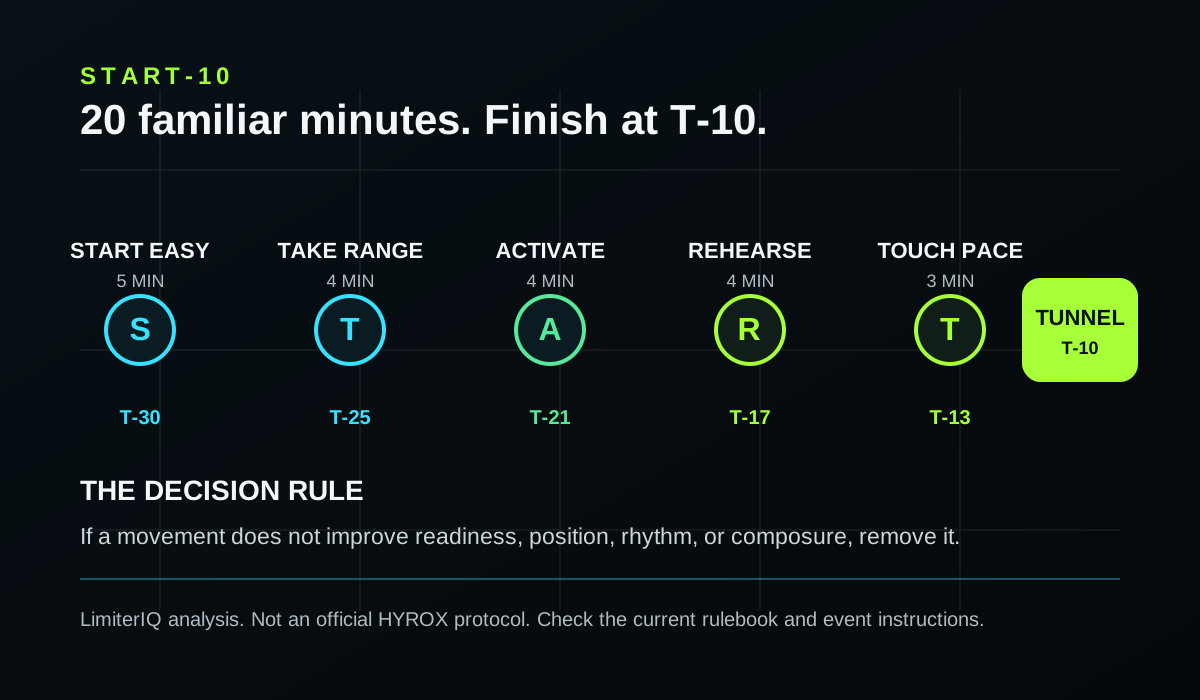
Walk, jog, cycle, or use an easy erg at a conversational effort. The goal is to feel warmer and more coordinated, not to chase a heart-rate number.
Move dynamically through the ankles, hips, upper back, and shoulders using ranges you already own. Keep the sequence short and familiar.
Use simple movements that organise posture and control: calf raises, marching, split-stance work, light trunk bracing, or band work you have rehearsed.
Touch two or three race-relevant patterns at a low dose. Use easy SkiErg or RowErg strokes, unweighted lunges, air squats, or a few technically clean wall balls if space and equipment allow.
Use two or three short progressive running efforts with full control between them. Finish at the pace cue you intend to open with, not a sprint. Then stop and move to the tunnel process.
| T-30 to T-25 | Start easy. Five minutes of light cyclical movement. |
|---|---|
| T-25 to T-21 | Take usable range. Dynamic movement through familiar positions. |
| T-21 to T-17 | Activate support. Small doses of posture, foot, hip, trunk, and shoulder control. |
| T-17 to T-13 | Rehearse patterns. A few easy, technically clean race movements. |
| T-13 to T-10 | Touch pace, then stop. Short progressive efforts, reset breathing, move to the tunnel. |
A systematic review and meta-analysis found that adequate warm-ups improved many of the performance outcomes studied, while a separate review supports a sequence of submaximal aerobic work, dynamic movement, and sport-specific activity. Neither review proves that one HYROX routine is best. START-10 applies those broad principles to the event clock and keeps the dose deliberately conservative.
Self-diagnosis
Adjust the routine by signal, not anxiety.
The framework stays stable. The dose can change. Use an observable signal rather than the urge to keep doing more.
| Signal | Likely need | Small adjustment |
|---|---|---|
| Cold or stiff | More gradual temperature and range work. | Add two easy minutes to the first phase by starting earlier. Do not steal time from T-10. |
| Flat but coordinated | A clearer pace signal. | Keep the early phases easy. Make the final two short efforts slightly more progressive, without sprinting. |
| Over-amped | Less stimulus and fewer decisions. | Shorten the pattern phase, keep the pace touches controlled, and use one opening cue. |
| Heavy after travel | Movement and time, not a fitness test. | Begin easy movement earlier. Avoid adding hard station work to chase a feeling. |
| Pain, illness, or concerning symptoms | A safety decision, not a warm-up adjustment. | Stop. Follow event medical guidance and seek appropriate qualified care. |
Crowded venue option
You do not need every station.
Race-relevant equipment may be available, but a busy warm-up area can make a station circuit impractical. Do not queue for equipment simply because the original plan included it.
Use this no-equipment version while preserving the same clock:
- Five minutes easy: brisk walk into an easy jog.
- Four minutes range: ankle rocks, leg swings, controlled lunges with rotation, and arm circles.
- Four minutes activation: calf raises, marching, split squats, bodyweight squats, and brief trunk tension.
- Four minutes patterns: A-march or A-skip, a few low burpee step-backs, unweighted lunges, and controlled squat-to-reach repetitions.
- Three minutes pace: two or three short progressive runs, then settle.
The substitutions do not reproduce sled load, erg rhythm, or wall-ball accuracy. They keep the warm-up's real job intact when equipment access changes.
Before race day
Rehearse the clock, not just the exercises.
A list of movements is not yet a routine. The difficult part is knowing how long each phase takes, which movements reliably help, where the sequence becomes too much, and how you feel after ten minutes of waiting.
Test START-10 before two specific training sessions. Begin the sequence 30 minutes before the main work. Finish at T-10. Wait or move lightly for the final ten minutes. Then start the session under control.
Afterwards, record four signals:
- Temperature: warm enough, still cold, or already sweating heavily.
- Movement: coordinated, restricted, or overworked.
- Opening effort: controlled, flat, or too aggressive.
- Cost: ready to race or aware that the warm-up itself created fatigue.
Change one variable at a time. The final race-day routine should be familiar enough that you can perform it in a crowded room without reading a long checklist.
Error state
If the start moves, do not restart everything.
A delay can turn a good warm-up into a second warm-up, then a third. Repeating the full sequence usually adds work without adding useful certainty.
Follow official instructions first. If the delay is brief, stay composed and move lightly. If it is long enough that you feel cold or flat, use a small re-warm: one or two minutes of easy movement, a few dynamic repetitions, and one or two short familiar pace touches. Stop before it becomes training.
Do not chase sweat.
Sweating is not a readiness score. Venue temperature, clothing, nerves, and individual response all change it.
Do not test race weight.
A heavy sled effort or large station set can create fatigue, doubt, or local soreness without telling you anything new.
Do not copy the room.
Another athlete's routine reflects their history, division, preferences, and nerves. Visibility is not evidence.
Do not spend T-10.
The start-tunnel window belongs to the event process. Finish on time and follow the current instructions.
Connect the warm-up to the race
Your warm-up should protect the limiter you are about to race.
If pacing is the limiter, the final pace touch should reinforce control. If station skill is the limiter, use a few clean pattern repetitions. If the limiter is still a guess, use the free LimiterIQ assessment before race week.
FAQ
HYROX warm-up questions.
How long should a HYROX warm-up take?
Use a duration you have rehearsed. The START-10 sample uses 20 minutes and finishes 10 minutes before the published start time, when the current Singles Rulebook says racers must assemble at the start tunnel.
Should I warm up every HYROX station?
No. Rehearse the movement patterns that help you feel ready, but do not turn the warm-up into a small race. A few easy, technically clean repetitions are enough when equipment is available.
What if the warm-up area is crowded or equipment is unavailable?
Use the no-equipment version: easy movement, dynamic range, simple activation, two or three short pace touches, then settle. Check current event communications because the exact venue setup can vary.
Should I use static stretching before a HYROX race?
Do not make unfamiliar long static holds the centre of race morning. If a brief familiar hold helps you access a known position, keep it conservative and follow it with dynamic, race-relevant movement.
What should I do if the start is delayed?
Stay warm without repeating the full routine. Use light movement and one or two brief familiar pace touches if the delay is long enough to feel cold or flat. Follow official instructions and keep the dose small.
Evidence
Sources and boundaries.
- HYROX official rulebook page and the Singles Rulebook, season 2026/27, verified 31 July 2026. Sections 11.3 and 11.4 support the designated warm-up area and T-10 start-tunnel requirements. Verify the current rulebook and event communications before racing.
- Fradkin, Zazryn and Smoliga, 2010. Systematic review and meta-analysis of warm-up effects on physical performance.
- Behm and Chaouachi, 2011. Review of acute static and dynamic stretching effects on performance.
This is training guidance, not medical advice. Stop and seek appropriate qualified care for pain, illness, breathing difficulty, dizziness, or concerning symptoms. LimiterIQ is independent and is not owned by, endorsed by, partnered with, sponsored by, certified by, approved by, or officially affiliated with HYROX World GmbH. HYROX is referenced descriptively only.
Continue the plan