
Short answer: athletes over 40 do not automatically need a longer or harder HYROX warm-up. Keep the rehearsed START-10 routine as the base. Check Warmth, Available range, Rhythm and Movement cost. If one signal is not yet adequate and none is concerning, make the smallest low-cost adjustment and still finish at T-10.
Myth correction
Your 40th birthday did not start a warm-up stopwatch.
The scene is familiar. You arrive at the venue feeling slightly stiff after travel. A younger athlete beside you starts fast strides. Someone says masters athletes need twice as long to warm up. The safest-looking response is to begin earlier and do more.
That rule sounds specific, but it hides the variables that actually matter: your training history, current temperature, sleep, travel, previous injuries, race experience, venue conditions and how your body responded in rehearsal.
Two athletes aged 46 can need different starts. The experienced athlete who has trained consistently for years may be ready inside the standard routine. The returning athlete who spent three hours sitting in transit may benefit from a few extra minutes of easy movement. Age describes both athletes poorly.
It is that chronological age alone cannot prescribe a useful dose. Adjust from observable readiness and a rehearsed response.
Evidence boundary
Warm-ups help. The perfect 40+ formula is not established.
A systematic review and meta-analysis found that warm-up activities improved most of the performance outcomes examined, although it also noted the shortage of well-conducted randomised trials. A physiological review describes active warm-up mechanisms and strategies. A 2026 international expert consensus describes warm-ups as structured, context-dependent preparation that can combine general, specific, active and passive elements. Those sources support warming up. They do not prove one universal duration for HYROX athletes over 40.
The age-specific evidence needs an equally clear boundary. A 2018 systematic review found that long-term training preserved aspects of physical function in master-athlete cohorts with a mean age above 59, with results depending on exercise mode. A 2016 narrative review found that research on recovery kinetics in masters athletes remained limited and required further study. Neither source establishes a rule for age 40 or a HYROX warm-up duration. In the searches run for this article, we found no direct trial comparing HYROX warm-up doses above and below age 40.
That leaves a practical evidence-led position: begin with a conservative routine, rehearse it, observe your response, and adjust one variable at a time. Do not convert an evidence gap into a confident internet rule.
General warm-up evidence supports active preparation. Observation: masters athletes differ widely. LimiterIQ inference: readiness signals are more useful than age alone when choosing a small race-day adjustment.
The stable base
Do not rebuild the routine. Add a decision layer.
The universal START-10 race-day warm-up already provides the sequence: easy movement, dynamic range, activation, race-pattern rehearsal, then brief pace touches. Its most important constraint is the finish. The current Singles Rulebook requires racers to assemble at the start tunnel ten minutes before their start time.
For a 40+ athlete, keep that T-10 finish. If rehearsal shows you need more time, begin the low-cost opening earlier. Do not steal minutes from the start process, and do not turn the extra time into more intensity.
| Default | Use rehearsed START-10. Begin at T-30 and finish at T-10. |
|---|---|
| Cold start | Use a rehearsed earlier opening. Add a short, easy block before T-30 without changing the main sequence. |
| Hot venue | Protect the same sequence. Reduce layers, total movement or pace touches if rehearsal supports it. |
| High nerves | Remove stimulation. A longer warm-up is not automatically a calmer one. |
The framework
WARM: four signals before you add anything.
Run this check after the first easy minutes and again before the pace touches. Each letter answers a different question. You are looking for enough readiness, not a perfect feeling.
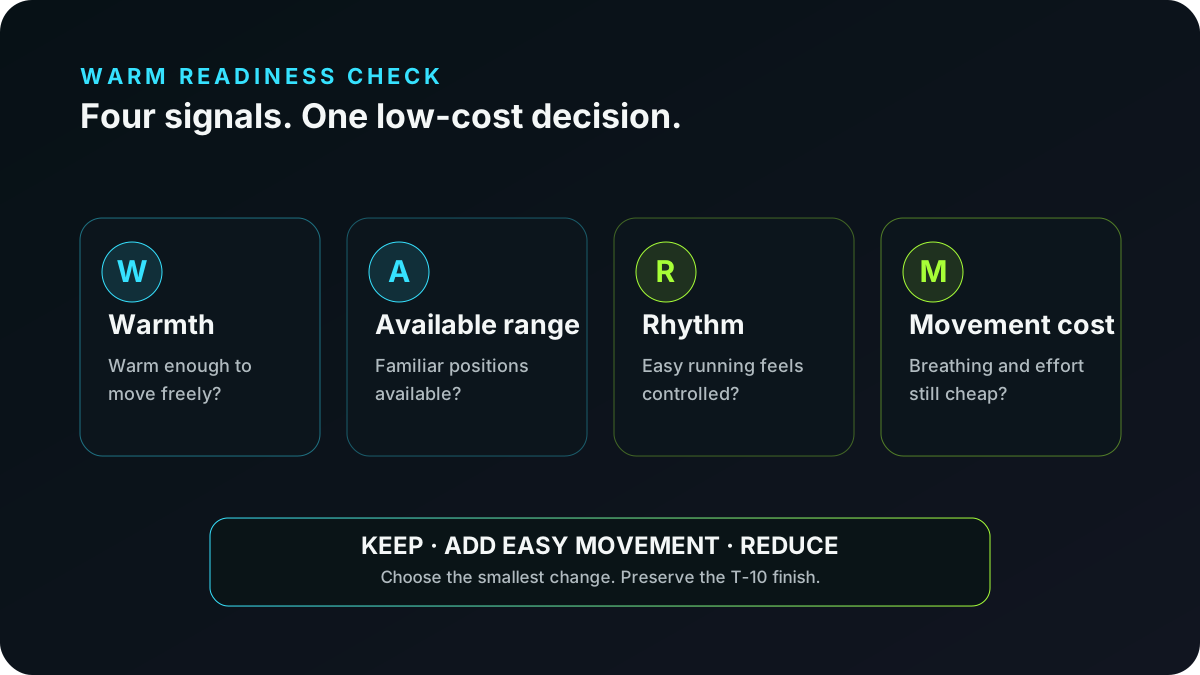
Do you feel physically warm enough to move freely without chasing heavy sweat? If not, use a short, easy block you have already tested, then reassess.
Can you access the familiar ankle, hip, trunk and shoulder positions your opening stations require? If not, repeat one known dynamic movement.
Does easy running feel coordinated and controlled? If not, use one short familiar build, then reassess.
Are breathing and effort still cheap? If the warm-up already feels like training, remove volume and settle.
| Signal pattern | Decision | Smallest adjustment |
|---|---|---|
| Cold, range limited, cost low | Start a little earlier | Add easy movement and one familiar range drill. Keep pace touches unchanged. |
| Warm, range available, rhythm flat | Keep the clock | Use one brief controlled acceleration with full recovery. |
| Warm, ready, cost rising | Reduce | Remove a pace touch or station pattern. Finish earlier if needed. |
| All four signals adequate | Stop changing | Follow the rehearsed plan and preserve T-10. |
| Pain or concerning symptoms | Stop | Follow event medical guidance and seek appropriate qualified care. |
Real athlete profiles
Four athletes over 40. Four different decisions.
The consistent age-group athlete
You train year-round and know the routine. If all four WARM signals are adequate, use the standard clock. More age does not require more work.
The first-time racer after 40
Do not assume race-day uncertainty means physical unreadiness. Rehearse the event sequence in training and use the same simple plan on race day.
The athlete returning from a lay-off
Reduce complexity. Choose fewer patterns you can perform confidently. Do not use race morning to test previous capacity.
The athlete with an old problem area
Use only movements already cleared and rehearsed for you. This article cannot decide whether pain is safe to race through.
The aim is personalisation without improvisation. You are not searching for a special masters routine. You are selecting the smallest change that protects the same race-day job.
Two-session test
Rehearse a standard version and a cold-start version.
Use two race-specific training sessions before the event. Keep the session that follows comparable enough to learn something useful. Record four simple observations rather than relying on a vague memory of feeling good.
- Session one: use the standard 20-minute START-10 sequence, then wait ten minutes before the first race-specific work.
- Record: mark each WARM signal as adequate, not yet, or concerning. Do not combine them into a readiness score.
- Session two: if the first session began cold, test one short, easy block at the front. Pre-set the duration and do not increase intensity.
- Compare: judge the opening kilometre and first station, not how impressive the warm-up felt.
- Lock it: choose the lower-cost version that produced adequate readiness, then stop experimenting in race week.
Clothing is part of the dose. In a cool venue, keeping a layer on during easy movement may solve the problem more cheaply than extra work. In heat, the right adjustment may be less movement, shade, fluid access and fewer pace touches, consistent with your tested plan and event guidance.
Delay protocol
Protect warmth without paying for the whole routine twice.
A start delay can make an earlier warm-up feel wasted. Do not answer that uncertainty by repeating every phase on a loop.
First, follow official instructions. Keep a layer on if conditions allow. Use easy walking or gentle movement. Recheck WARM. If warmth or rhythm has genuinely dropped and timing permits, restore only that signal with one familiar movement or pace touch.
Do not chase sweat.
Sweat is not a readiness score, especially in a warm or crowded venue.
Do not chase youth.
The routine beside you is not evidence about your needs, regardless of the athlete's age.
Do not spend T-10.
The final ten minutes belong to event instructions, position and composure.
Connect warm-up to race demand
Warm up for the limiter you actually have.
If your limiter is pacing, protect restraint in the final pace touch. If it is station skill, select one clean familiar pattern. If the limiter is still a guess, use the free LimiterIQ assessment before race week.
FAQ
HYROX warm-up questions after 40.
Do HYROX athletes over 40 need a longer warm-up?
Not automatically. Age 40 is not a timer. Use rehearsed readiness signals to decide whether to begin a few minutes earlier, while keeping the work easy and preserving the T-10 finish.
What is the WARM check?
WARM stands for Warmth, Available range, Rhythm and Movement cost. It is a four-signal observation tool that helps an athlete adjust a rehearsed warm-up without guessing from age alone. It is not a medical test and must not be used to clear pain or concerning symptoms.
Should I warm up harder after 40?
No. The goal is readiness at low cost. If you need more time, add easy movement or familiar range work rather than more intensity, volume or station fatigue.
How should I adjust the warm-up after a start delay?
Keep warm with light movement. Repeat only the smallest familiar element needed to restore warmth or rhythm. Do not repeat the entire routine unless that exact delay response has been rehearsed.
What symptoms mean I should stop warming up?
Stop and tell event medical staff if you have chest pain or tightness, unusual shortness of breath, feel lightheaded, dizzy or faint, or develop another concerning symptom. Call local emergency services immediately, including 000 in Australia, if chest pain is severe, gets worse or lasts longer than 10 minutes. Do not use WARM to clear symptoms. This article does not diagnose or treat medical conditions.
Evidence
Sources and boundaries.
- HYROX official rulebook page and its current Singles Rulebook, season 2026/27, verified 1 August 2026. Sections 11.3 and 11.4 support the warm-up area and T-10 start-tunnel requirements. Verify the current rulebook and event communications before racing.
- Fradkin, Zazryn and Smoliga, 2010. Systematic review and meta-analysis of warm-up effects on physical performance.
- McGowan and colleagues, 2015. Review of warm-up strategies for sport and exercise.
- Boullosa and colleagues, 2026. International expert consensus on context-dependent warm-up structure, readiness and fatigue.
- Borges and colleagues, 2016. Narrative review of performance and recovery in masters athletes.
- Mckendry and colleagues, 2018. Systematic review and meta-analysis of muscle morphology and performance in masters athletes.
- Healthdirect Australia. General exercise stop signs and guidance to seek urgent help for severe chest pain.
This is training guidance, not medical advice. Stop and tell event medical staff if you have chest pain or tightness, unusual shortness of breath, feel lightheaded, dizzy or faint, or develop another concerning symptom. Call local emergency services immediately, including 000 in Australia, if chest pain is severe, gets worse or lasts longer than 10 minutes. Do not use WARM to clear symptoms. LimiterIQ is independent and is not owned by, endorsed by, partnered with, sponsored by, certified by, approved by, or officially affiliated with HYROX World GmbH. HYROX is referenced descriptively only.
Continue the plan